
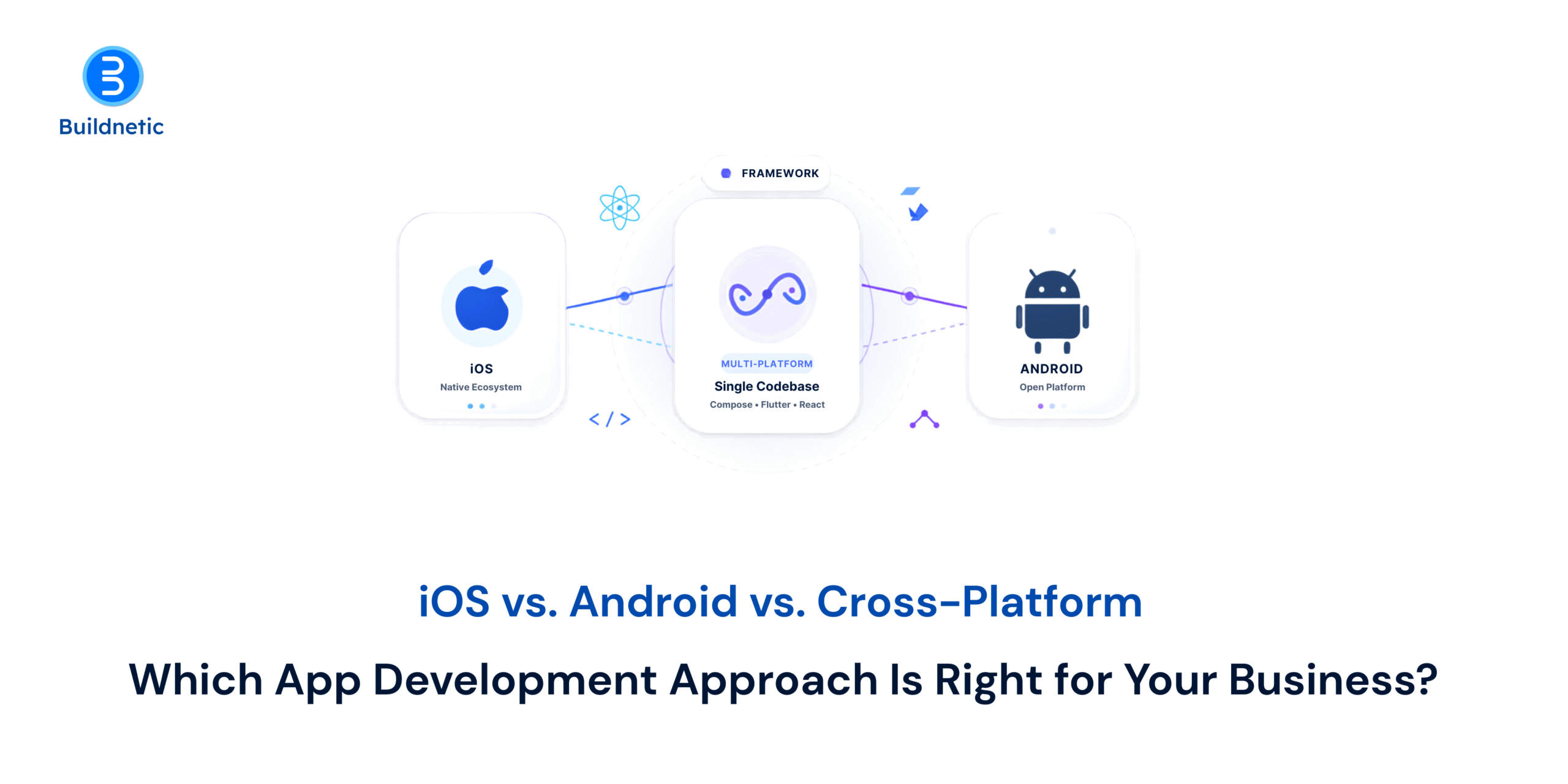
Most people think the hardest part of building an app is the design or the code. Well, that’s not the most difficult aspect. The harder part comes earlier, when you decide whether your app should run on iPhone, Android or both. Choose well and everything after that gets easier. Here’s how to make the right call.
What’s the Difference Between Native and Cross-Platform Apps?
A native app is made for one type of phone only. iPhone apps are usually written in a language called Swift, and Android apps in Kotlin. They run smoothly and can use every phone feature, but you’ll have two separate apps to build and look after.
A cross-platform app is written once and works on both iPhone and Android. Most teams use Flutter or React Native, and the apps feel just like regular phone apps. Ionic, which uses website technology, is better suited to simple apps.
Even with a cross-platform app, some codes may need to be written separately for each phone. This usually applies to features like Bluetooth, advanced camera settings or tasks that run while the app is closed.
Check Your Audience Before Picking iOS or Android
Your website data can save you a lot of guesswork. Google Analytics shows which phones your visitors use, and this often points you to the right place to start.
When to Build Your App for iPhone First
This makes sense when most of your customers own an iPhone, or when your app needs to connect closely with other Apple products. A fitness app that links to Apple Health and the Apple Watch is much easier to build in Swift.
In the US and UK, iPhone users tend to spend more on apps and subscriptions. That’s why many subscription businesses launch there first. Just plan for Apple’s review process, as every update is checked before it goes live.
When Android Should Be Your First Choice
Android phones come from many brands, like Samsung, Xiaomi and OnePlus. In countries like India, most people own one. If your customers are mainly there, Android is usually the best place to start.
A native Android app also makes sense when it needs to work with special hardware. Think of a delivery company whose drivers scan parcels with handheld barcode scanners. Kotlin gives you better control over devices like these.
With so many Android phones out there, testing matters more. Check your app on the models your customers actually use, including older and budget phones. This helps you avoid crashes and layout issues after launch.
When a Cross-Platform App Makes More Sense
If your app works the same way on iPhone and Android, one shared app is often the sensible option. Booking apps, customer portals, staff tools and online shops usually fit well. It is a preferred choice by startups as they can launch on both app stores quickly.
Many apps actually use a mix of both. A banking app, for example, might build most of its screens in React Native. But features like fingerprint login and security checks are often written separately for iPhone and Android. This gives them extra speed and protection where it matters most. So when you hire cross-platform mobile app developers, make sure they can also write native code for each phone.
Planning Your App for Future Growth
Your first version is only the start. If you plan to add features like offline access or advanced graphics later, mention them to your developers early. This helps them choose a setup that won’t need rebuilding down the line. It’s also wise to set aside a budget for regular updates. Apple and Google release new phone software every year, and your app will need to keep up.
How Buildnetic Can Help With Your App
Buildnetic builds iPhone apps in Swift, Android apps in Kotlin, and cross-platform apps with Flutter, React Native and Ionic. It also offers custom application development and dedicated developers for ongoing work.
FAQs
Should I build for iOS or Android first?
Start where most of your customers are. Your website data and sales figures will usually make this clear.
Is cross-platform development cheaper than native?
Usually, yes, because there is only one app to build and update. The savings are smaller if your app needs many phone-specific features.
How do I choose an iOS and Android app development company?
Look at apps they have already made for iPhone and Android. Ask how they test on real phones and what support they give after launch. A good company will explain why it recommends one option.
Can a cross-platform app be changed to a native app later?
Yes, but it usually means rebuilding the app. Many businesses do this in stages, starting with the parts that need to run fastest.