
Most business owners we speak to feel fairly confident about their security. There’s a firewall, the antivirus is up to date, and staff know to use strong passwords. But small gaps have a way of creeping in over time, usually without anyone noticing.
Maybe a website plugin missed an update last spring. Or an old staff account was never switched off. None of this feels urgent on a busy Monday morning. Yet these are often the first things an attacker goes looking for.
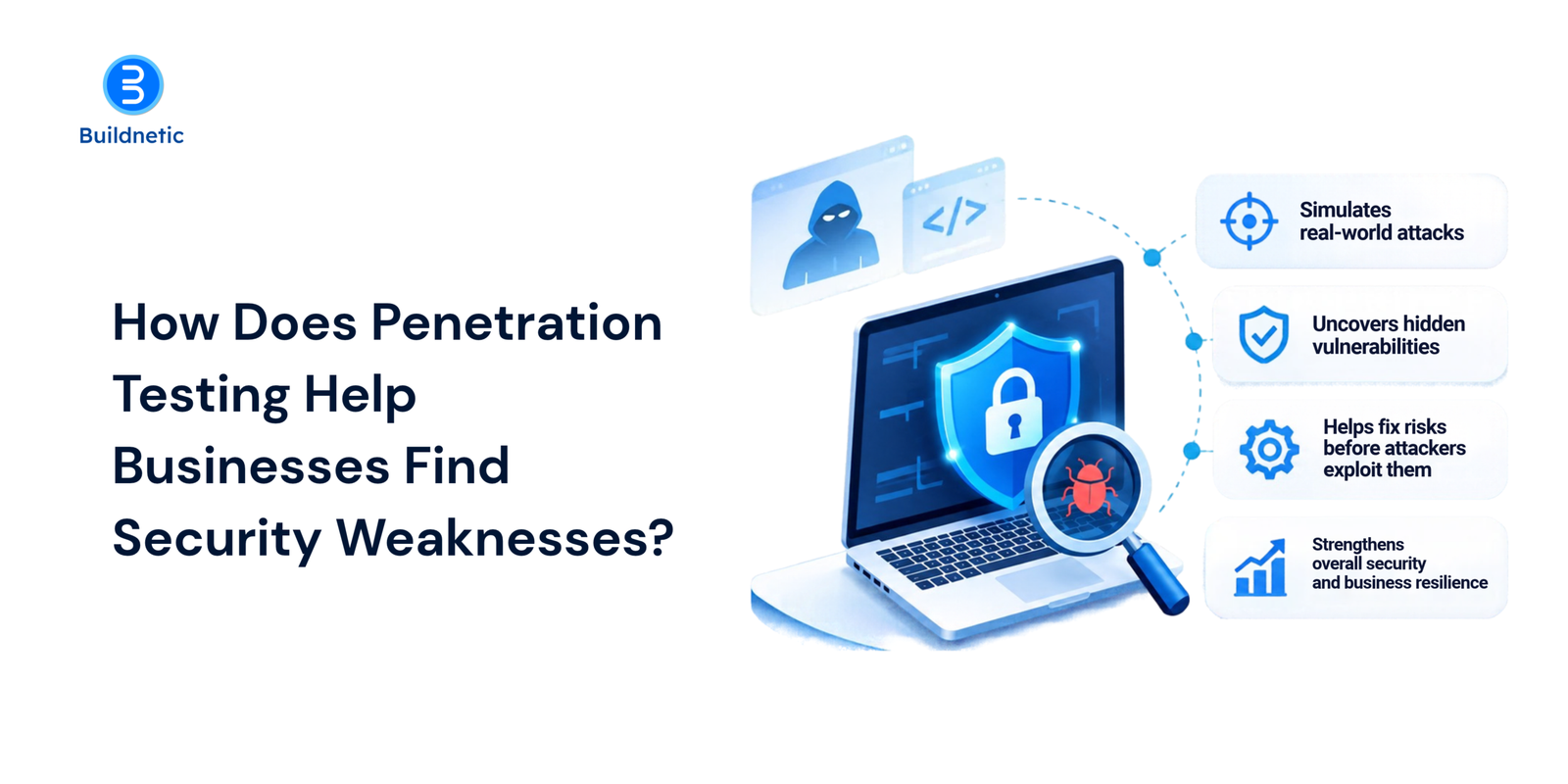
Finding them early is the whole idea behind penetration testing. A good penetration testing company will try to get into your systems the way an outsider might. The difference is that they do it with your permission, and they tell you everything they find.
So, what happens during a test?
It starts with a conversation. You and the testers agree on what they’ll look at, whether that’s your website, office network, cloud apps or email. You also agree on timing, so your day-to-day work isn’t affected.
People sometimes ask how this differs from a vulnerability scan. A scan is a piece of software that runs through your systems and flags anything that looks risky. It’s useful, but it can’t tell you how serious a problem is. A penetration tester goes and checks. If a weakness could actually be used to get in, they’ll show you how.
Looking at your business from the outside in
Most testers begin with what anyone on the internet could see. That means your main website, any older sites, login pages and the services linked to them. It’s surprisingly common to find a test page from years ago that’s still online.
After that, they start trying things out, carefully and within the agreed limits. A contact form might be checked to see if it gives away more than it should. An admin login might be tested to see whether a password alone is enough to get in.
What we find most interesting is how small issues can add up. A minor flaw on its own might not worry anyone. Put it next to a reused password, though, and it could open a much bigger door. Automated tools rarely make that connection, but an experienced person often will.
Some businesses also ask for their team to be included. That might mean sending a harmless practice email that looks a bit like a scam. It just shows where a short refresher on spotting suspicious emails might help.
Issues that come up quite often
No two businesses are alike, but a few findings appear again and again. Out-of-date software is probably the most common. Logins that rely on a password alone come a close second. Every so often, we also see staff who can open files they don’t really need for their role.
Cloud sharing settings are worth a look too, as one left open can expose more than intended. Thankfully, most of these are quick fixes once they’ve been spotted.
The report, and what to do with it
Once testing is finished, you’ll get a written report. Each issue is given a risk level, from low to critical, so your team knows what to tackle first. Each comes with a plain explanation of how to put it right.
It’s worth asking whether a retest is included. After your fixes are in place, a short second check confirms nothing was missed.
Why work with a penetration testing company?
Your IT team knows your setup inside out, and that matters. But when you work with the same systems every day, some things naturally fade into the background. An outside penetration testing company sees everything with fresh eyes. Having worked with lots of different businesses, they also tend to know where problems like to hide.
There can be a compliance side as well. Many industry standards, especially those linked to card payments, expect regular testing.
Here at Buildnetic, we treat penetration testing as part of looking after your IT as a whole. If something turns up, our managed IT support team can help sort it out. You won’t be left working through the report alone.
A final thought
Security doesn’t need to feel overwhelming. A penetration test simply shows you where things stand today, so you can make sensible improvements at your own pace. Once a year, plus after any big change, is a comfortable rhythm for most businesses. If you’d like to talk it through, the Buildnetic team is happy to explain our penetration testing services.
FAQs
How often should we have a penetration test done?
Once a year suits most businesses. It’s also a good idea after a big change, like a new website going live or a move to the cloud.
Isn’t a vulnerability scan enough?
A scan is handy for regular check-ups, but it only points out what might be wrong. A penetration test goes a step further and shows whether someone could actually get in.
Will it get in the way of our daily work?
Usually, you won’t notice it’s happening. Timing is agreed with you beforehand, and anything more sensitive can be done outside office hours.
How long does it take?
That depends on how much is being tested. A single website might take a few days, while a bigger setup could take a couple of weeks.
What should we look for in a provider?
An experienced team that explains things simply is a good sign. It’s also worth asking to see a sample report and checking that a retest is included.